

Flute Warm-Ups, Scales & Arpeggios and Technique Exercises
Make daily flute technique practice a pleasure, not a chore.
The foundations of good flute technique are grounded in long tradition: sonority, finger dexterity, flexibility, articulation, high notes and intonation – as well as, of course, scales and arpeggios. But effective practice isn’t simply about doing more. The quality of our practice – and how musically engaged we are with it – really makes the difference.
Our flute technique exercises are designed to bring these elements together in short, focused and musical daily practice. Start with the free Micro Etudes sample set, or explore the complete collection below.
 Flute technique
Parry Micro Etudes: FREE SAMPLE SET
£0.00FREE SAMPLE SET. Melodic flute technique exercises in keys up to four sharps and flats. Flute sonority, fingers, embouchure flexibility, high notes, articulation and intonation.
- Flute music
Parry Micro Etudes: Melodic Technique Exercises for Flute
£20.00Melodic flute technique exercises in keys up to four sharps and flats. Flute sonority, fingers, embouchure flexibility, high notes, articulation and intonation. Plus free playalong accompaniment tracks.

A more musical approach to flute practice
What if you didn't need to practice harder, but instead you could practice better? To really succeed in developing flute technique, the quality of our practice matters more than sheer mechanical quantity. And the key to achieving that is being truly musically engaged.
Micro Etudes grew out of a wide exploration of current research into effective practice. It works through short, focused exercises which develop the essential elements of flute technique within a real musical experience. Tone, finger dexterity, flexibility, articulation, high notes and intonation are made integral to musicianship, so that practice becomes a pleasure, not a chore.
What makes an effective flute warm-up?
An effective flute warm-up should prepare us for the music we are going to play, rather than becoming a separate routine of mindless exercises. Tone and sonority, finger dexterity, flexibility, articulation, high notes and intonation can all form part of the warm-up, with the emphasis changing according to the repertoire we are practising.
Different kinds of technical work have different purposes. Finger dexterity exercises can isolate particular fingering problems – weak fingers or difficult changes, for example – while scales and arpeggios develop ease and fluency in every key and are essential preparation for confident sight-reading.
The most useful flute warm-ups therefore connect technique with music: identify what the repertoire requires, work on those skills in a focused way, and then carry the results directly into your playing.
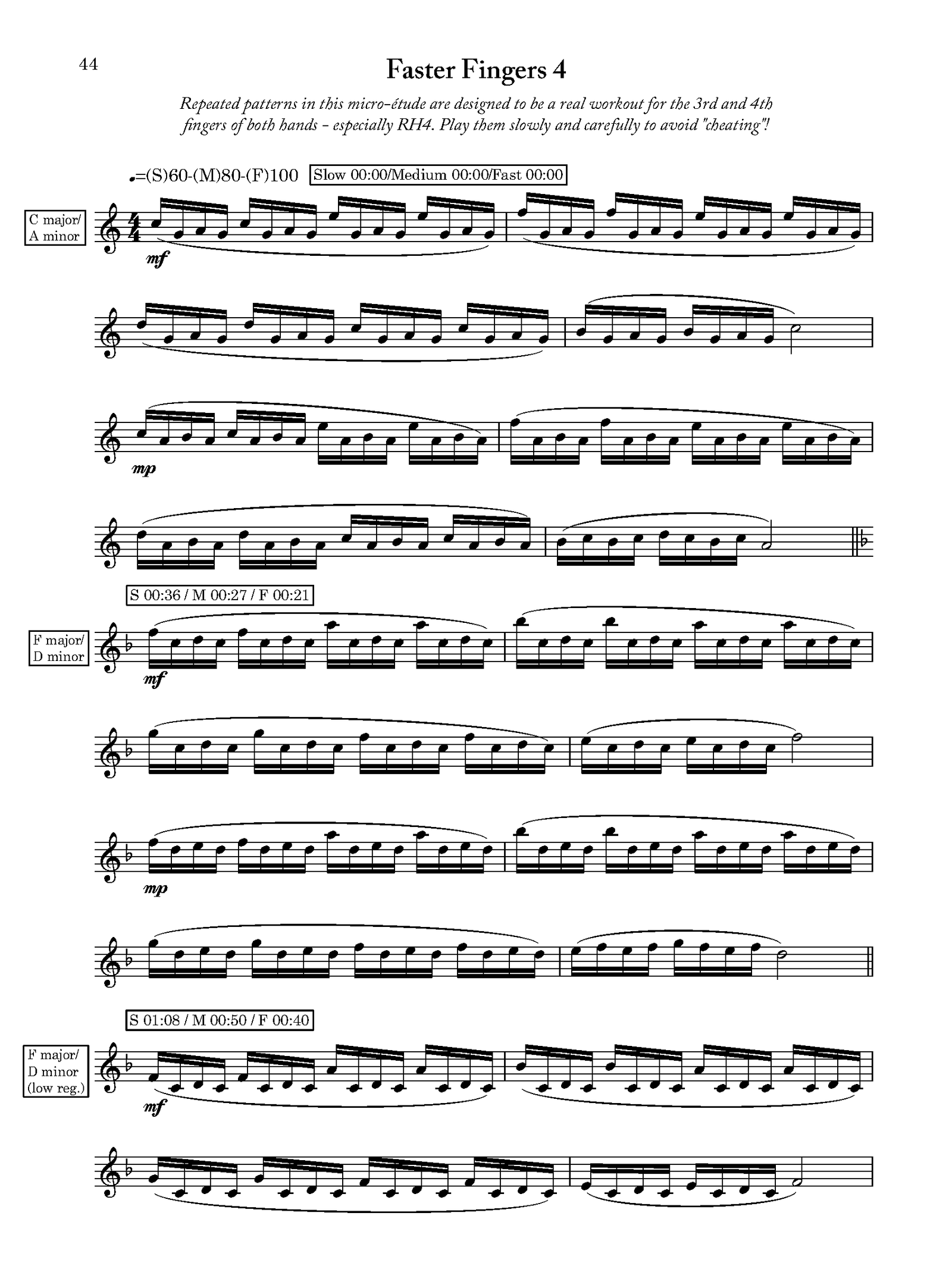
A flute finger dexterity exercise from Micro Etudes by Elisabeth Parry, designed to develop secure finger changes through short, focused musical practice.

National Flute Association recognition
Micro Etudes was recognised in the National Flute Association’s Newly Published Music Competition and is included in the NFA’s Selected Guide to Flute Repertoire and Studies.
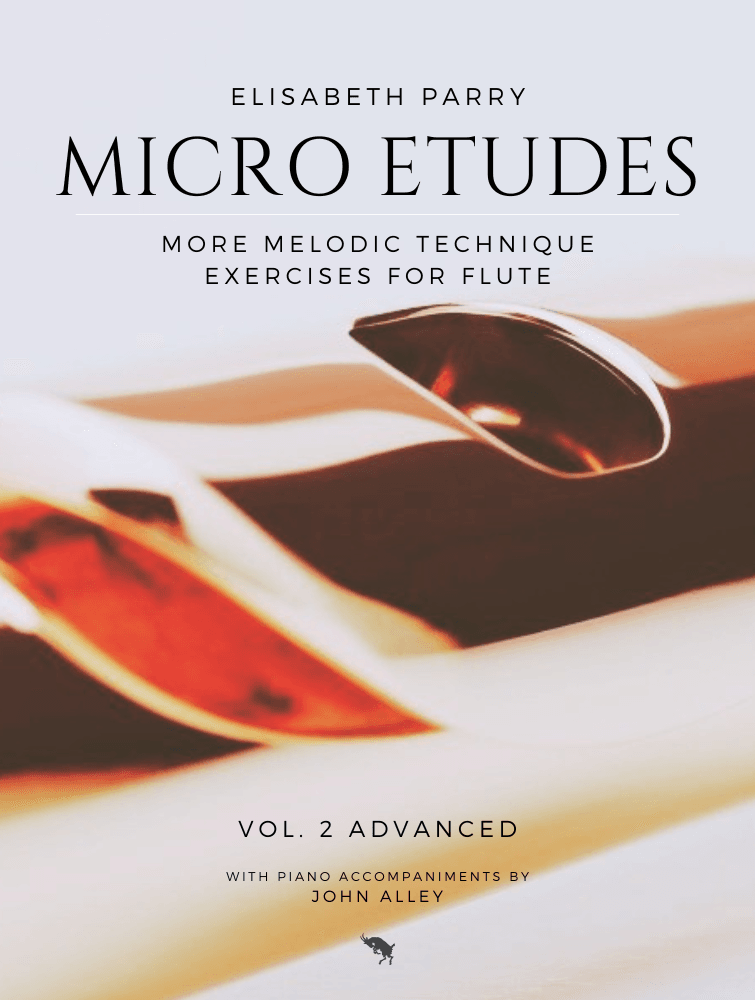
Coming soon: Micro Etudes Volume 2
Volume 2 takes the same approach further, with more challenging keys and more advanced finger work, while retaining the short, focused and musical approach of Volume 1.